Background
Climate change, characterised by long-term shifts in temperature, precipitation patterns and increased frequency of extreme weather events, poses significant challenges to various aspects of human life and infrastructure. One area of increasing attention is the impact of climate change on road safety (Klingelhöfer et al., 2020). The transportation sector is particularly vulnerable to the effects of climate change, as it relies heavily on weather conditions for safe and efficient operations (Markolf et al., 2019). Changes in weather patterns, such as increased rainfall, snow, ice, heatwaves, and the frequency and intensity of storms, can directly influence road conditions and impact driving behaviour, leading to increased crash risk (Bolan et al., 2024; Koetse & Rietveld, 2009; Mfarrej, 2019).
The evolving nature of climate change introduces new variables and uncertainties (Reddy et al., 2019). The increase in the frequency and severity of extreme weather events poses major challenges to maintaining road safety (Stott, 2016). As climates shift, regions previously unaccustomed to extreme weather (e.g., heavy snow, intense heat), may experience new risks on the road. The unpredictability of these changes makes it difficult for current road safety measures to keep pace, prompting the need for a comprehensive analysis of the available data on the impact of climate change on road safety (Safarpour et al., 2020).
Trauma from crashes on the road has far-reaching consequences, including loss of life, injury, and economic costs (Pal et al., 2019). Understanding the relationship between climate change and road safety is crucial for developing effective mitigation strategies (Fawzy et al., 2020). Previous studies have highlighted the correlation between adverse weather conditions and increased trauma rates, but a comprehensive synthesis is needed to understand the full extent of the issue, identify gaps in knowledge (Bergel-Hayat et al., 2013; Conti et al., 2022) to inform policy, planning, and public safety measures and infrastructure resilience (de Abreu et al., 2022). For policymakers, robust evidence is essential to formulate effective road safety measures that consider these evolving climatic conditions, ensuring that transportation systems remain safe and operational (Kumar et al., 2023).
Despite the growing recognition of the need to address the intersection of climate change and road safety, significant gaps in current knowledge persist. Moreover, public health and safety are paramount concerns, and reducing road trauma through informed strategies can save lives and prevent injuries (Fanai & Mohammadnezhad, 2023). Many existing studies are limited in scope, often focusing on short-term weather events rather than long-term climatic trends. There is also a noticeable lack of research integrating climate projections with trauma data over extended periods and across diverse geographical regions (Goodess et al., 2012). These gaps hinder the development of a comprehensive understanding of the issue and the formulation of effective mitigation strategies.
Furthermore, existing literature often lacks a multidisciplinary approach, failing to consider the complex interactions between climatic factors, road infrastructure and human behaviour. Addressing these gaps through a systematic review will provide a clearer picture of how climate change influences road safety.
The aim of this study was to comprehensively evaluate and synthesise existing research on the impact of climate change on road crashes to inform policymakers, urban planners, and public health officials on effective strategies for enhancing road safety and infrastructure resilience. The specific research questions were:
-
What is the relationship between specific climate change-induced weather conditions (e.g., heavy rainfall, snow, ice, heatwaves) and the incidence of road crashes?
-
How effective are current road safety measures and infrastructure adaptations in mitigating crash risks associated with climate change-induced weather events?
Methods
This study was a systematic literature review using the Preferred Reporting Items for Systematic Reviews and Meta-analyses (PRISMA) guidelines. Our findings directly address the stated objectives by synthesising evidence on (1) the relationship between specific climate change-induced weather events and crashes on the road, and (2) the effectiveness of existing road safety and infrastructure adaptation measures.
Study identification
A comprehensive search strategy was developed using predefined keywords combined with Boolean operators (AND, OR). These keywords included terms (“climate change” OR “global warming”) AND (“weather conditions” OR “extreme weather” OR “rainfall” OR “snow” OR “ice” OR “heatwaves” OR “storms”) AND (“road safety” OR “traffic trauma” OR “road trauma”) In addition, reference lists of all the identified papers were reviewed for further eligible publications.
Using this search string, three databases were searched: Web of Science, Pubmed and SCOPUS. The inclusion criteria were:
-
Peer-reviewed articles, systematic reviews, meta-analyses, case studies, and government or organisational reports focusing on the impact of climate change on crashes on the road
-
Studies that specifically addressed the influence of climate change-related weather conditions (e.g., heavy rainfall, snow, ice, heatwaves, storms) on road safety and trauma rates
-
Articles published in English
-
Date limited to 2015 onwards
The exclusion criteria were:
-
Studies that lack sufficient data, analysis, or methodological rigour to establish a clear connection between climate change and road safety
-
Reviews, editorials, opinion pieces, and other non-empirical articles
-
Articles that met the inclusion criteria but were not available in English
In addition, the PEO (Population, Exposure, Outcome) criteria were used to evaluate the impact of climate change on crashes involving all road users, including drivers, passengers, cyclists, and pedestrians. The exposure of interest was to climate change-induced weather conditions, including heavy rainfall, snow, ice, heatwaves, storms, and other extreme events. The outcome focuses on incidence and severity of trauma as a result of a crash on the road.
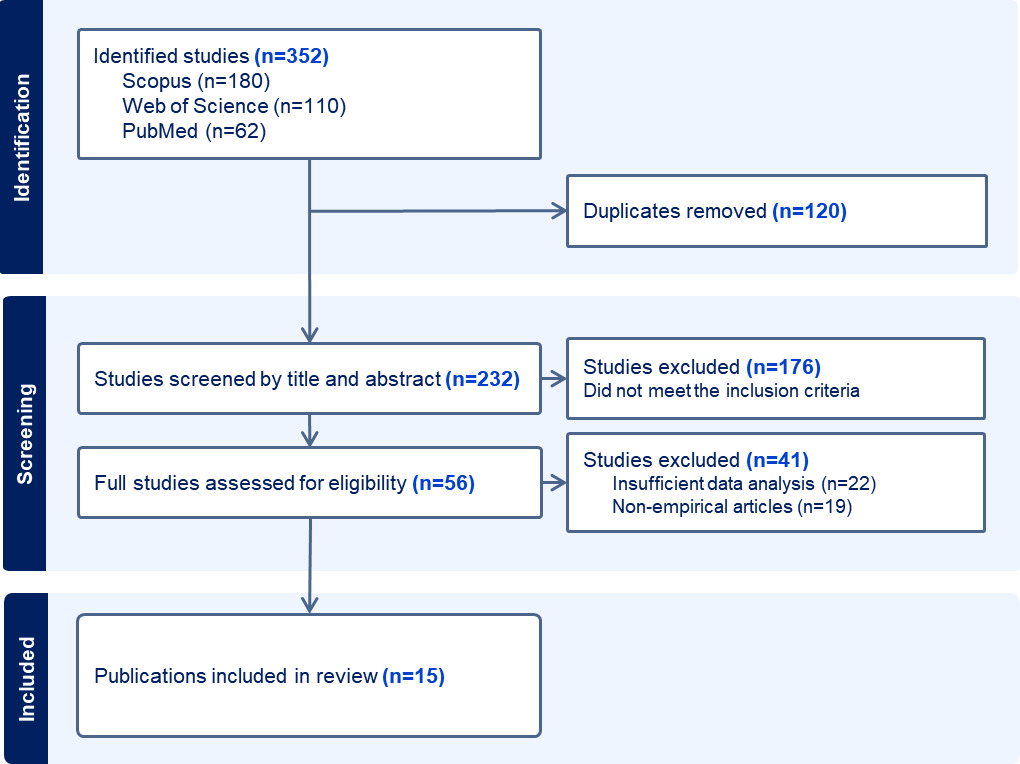
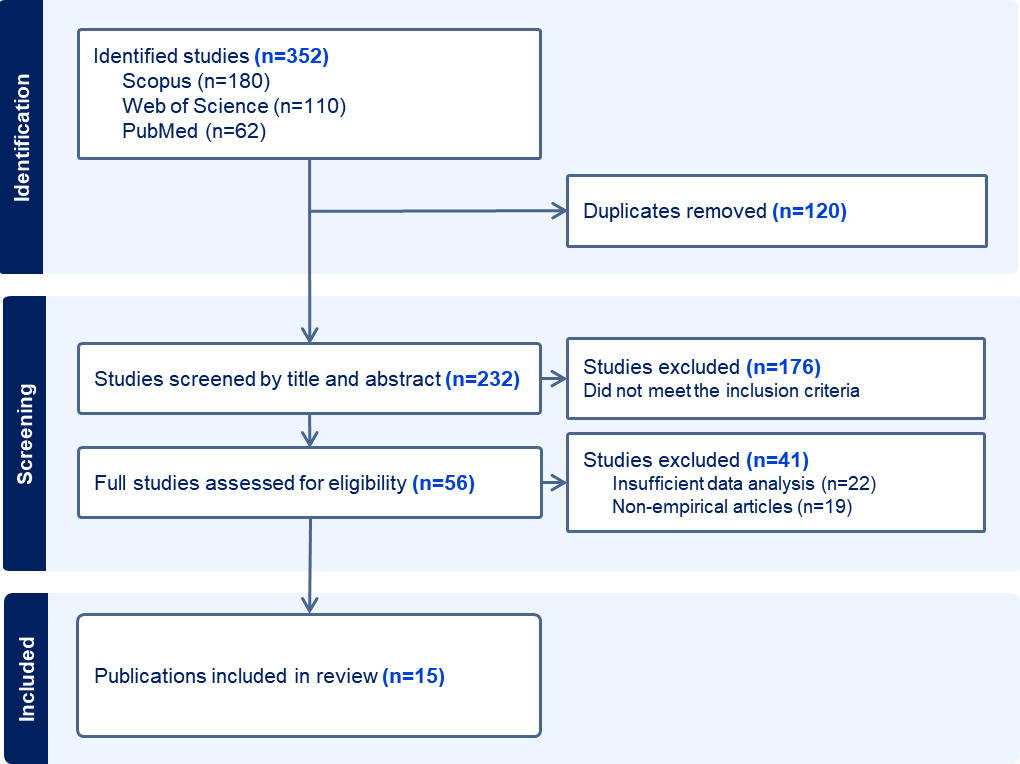
In this review, ‘road trauma’ refers specifically to crashes that occurred on the road network and resulted in injury or death. Studies that focused solely on property-damage-only crashes were excluded. A total of 352 records were identified through database searching across three major databases: Scopus (n=180), Web of Science (n=110) and PubMed (n=62). After duplicates were removed, 232 publications were included.
Search Results
The titles and abstracts of these records (n=232) were then screened for relevance based on the predefined inclusion and exclusion criteria. This screening process was conducted independently by two reviewers to ensure objectivity and minimise bias. Following the screening process, 56 records were deemed potentially relevant and their full texts were retrieved and assessed for eligibility based on their focus on climate change-induced weather conditions and their impact on road trauma. During this stage, 41 articles were excluded due to insufficient data analysis or methodological rigour to establish a clear connection between climate change and road safety, non-empirical articles (e.g., reviews, editorials, opinion pieces).
A total of 15 studies met the inclusion criteria (Figure 1, Table 1). These included 12 studies that examined casualty crashes (injuries and/or fatalities) and 3 studies that included all reported crashes with disaggregated data for injury outcomes. Due to the limited availability of studies explicitly examining climate change-induced weather events (e.g., heatwaves, severe storms), we also included studies addressing adverse weather conditions (e.g., heavy rainfall, snow, fog) that serve as proxies for such events. These conditions are expected to increase in frequency and severity with climate change, making them relevant for understanding potential impacts on road safety. The majority of studies (n=10, 66.7%) included all road users and the remaining studies (n=5, 33.3%) focused specifically on motor vehicle occupants. In terms of climate and weather conditions, the focus of the studies was divided between adverse weather conditions (n=8, 53.3%) that are expected to become more frequent with climate change (e.g., snow, fog, reduced visibility) or studies (n=7, 46.7%) that directly addressed climate change-relevant extreme events (e.g., heatwaves, storms, heavy rainfall). This distinction is important as it highlights both current impacts and potential future risks. Figure 1 presents the PRISMA flowchart for included studies.
Data Extraction and Quality Assessment
A standardised form was used to extract data from the selected studies, including information on authors, year of publication, location, sample size, weather conditions examined, and main findings. The quality of the included studies was assessed using the Newcastle-Ottawa Scale (NOS) for cross-sectional studies. This scale evaluates the quality based on selection, comparability, and outcome assessment, with a score range of 0-9. The quality assessment was conducted independently by two reviewers, with discrepancies resolved by discussion or consultation with a third reviewer. Table 1 presents a summary of the extracted data for the included studies.
Results
In this systematic review, we analysed 15 studies to understand the relationship between climate change-induced weather conditions and road trauma. The studies collectively revealed how various extreme weather conditions such as heavy rainfall, snow, ice, heatwaves and storms influence road safety and trauma rates across different geographical locations.
Relationship between various climate change-induced weather conditions with trauma
The reviewed studies provide a comprehensive view of how climate change-induced weather conditions significantly impact road safety, revealing a complex interplay between environmental factors and human behaviour. In Saudi Arabia, the combination of extreme temperatures, heavy rainfall, and sandstorms exacerbated road traffic trauma, particularly in urban areas where these conditions worsen congestion and reduce visibility (Islam et al., 2019). This highlights a critical issue: the urban infrastructure in many regions is not adequately equipped to handle extreme weather conditions and this can lead to increased trauma.
In Pakistan, similar findings were noted, with temperature and precipitation being strong predictors of road traffic trauma. The influence of wind speed and humidity further complicates the scenario, suggesting that even moderate weather changes can significantly impact road safety (Ali et al., 2019). This is particularly concerning as climate change is expected to increase the frequency and severity of such weather events.
The situation in China underscores the multifaceted nature of this issue. Elevated levels of air pollutants including fine particulate matter (PM2.5), nitrogen dioxide (NO2), and carbon monoxide (CO) were linked to an increased risk of traffic trauma, highlighting an often-overlooked aspect of road safety: air quality (Liang et al., 2022). Poor air quality can impair driver concentration and reaction times, making crashes more likely. This suggests that addressing road safety in the context of climate change requires a multi-disciplinary approach that includes environmental health.
The presence of invisible road hazards, such as black ice, further complicates road safety. In Poland, black ice was shown to significantly increase braking distances and reduce vehicle stability, making it a severe risk during winter months (Kurczyński & Zuska, 2022). This finding points to a critical gap in driver awareness and road maintenance practices, as many drivers may not be prepared for such sudden changes in road conditions.
Moreover, the risks posed by adverse weather conditions are exacerbated for specific groups, such as young and inexperienced drivers. In China, these drivers are particularly vulnerable during adverse weather conditions, such as snow, ice, and heavy rainfall, which increase the likelihood of trauma (C. Chen & Zhang, 2016). This demographic trend underscores the need for targeted risk-communication and hazard-awareness strategies that support safer decision-making during adverse weather conditions.
Effectiveness of Current Road Safety Measures and Infrastructure Adaptations
There was considerable variability in the effectiveness of current road safety measures and infrastructure adaptations across different regions and weather conditions. In cold climates, such as Poland, the implementation of black ice detection systems and proactive road maintenance strategies, including timely snow removal and the application of de-icing agents, are vital. However, inconsistent implementation and maintenance practices reduce their overall efficacy, leaving drivers vulnerable to sudden changes in road conditions (Kurczyński & Zuska, 2022).
In regions with heavy rainfall, like Macao and Portugal, effective drainage systems are essential to prevent water accumulation on roads, which can lead to hydroplaning and increased trauma risks. However, the functionality of these systems is often compromised by poor design, inadequate maintenance, or insufficient capacity to handle extreme weather events (Ali et al., 2019; Lobo et al., 2019). This inadequacy highlights a critical gap in infrastructure resilience. Upgrades and regular maintenance are essential to ensure their effectiveness during severe weather.
Public awareness campaigns and driver education are crucial components of road safety strategies. Public information and risk-communication initiatives are commonly used to raise driver awareness of weather-related hazards and to support safer decision-making during adverse conditions. However, evidence for a direct reduction in crash risk from education or training alone remains limited. These initiatives often suffer from limited reach and frequency, particularly among younger and less experienced drivers, who are statistically more likely to be involved in weather-related trauma (C. Chen & Zhang, 2016). To address this, there is a need for more targeted and sustained educational efforts, possibly integrated into driver licensing processes and ongoing public safety communications.
The adoption of advanced weather forecasting and real-time traffic monitoring systems represents a promising development in enhancing road safety (Feng et al., 2025). These technologies enable authorities to issue timely alerts and implement preventive measures, such as adjusting traffic flows or temporarily closing hazardous road segments. However, the integration of these systems into public communication networks and transportation management infrastructure remains limited (Moriano et al., 2024). Effective use of these systems requires robust coordination between meteorological services, traffic management authorities, and the general public, ensuring that accurate and timely information reaches drivers.
Moreover, there is a critical need for infrastructure resilience upgrades to withstand the increasing frequency and intensity of extreme weather events due to climate change. This includes reinforcing road surfaces, improving signage and lighting for better visibility, and developing emergency response plans tailored to local climatic conditions (Rezvani et al., 2024). Investments in such infrastructure improvements are essential to enhance the safety and reliability of road networks under adverse weather conditions.
Discussion
The results of this systematic review underscore the complex relationship between climate change-induced weather conditions and road trauma. Our analysis revealed a consistent association between extreme weather events such as heavy rainfall, snow, ice, heatwaves and storms and increased road trauma rates across various geographical contexts. This discussion evaluates these findings in relation to existing literature and highlights the implications for road safety policy and practice.
Heavy rainfall and storms, including typhoons and floods, were consistently linked to higher trauma rates. These conditions can deteriorate road surfaces, reduce visibility, and challenge drivers’ ability to maintain control of their vehicles, thereby increasing crash risk. Snowfall and icy conditions also emerged as significant risk factors, particularly affecting vehicle speed and road conditions, which necessitates improved safety measures in regions prone to such weather. The role of infrastructure in mitigating road safety risks during adverse weather is well-established. For instance, Kalantari et al (2013) noted that well-maintained roads with proper drainage systems significantly reduce trauma during heavy rainfall. Findings from Macao and Portugal, where inadequate drainage led to increased trauma rates, emphasised the need for consistent infrastructure improvements (Ali et al., 2019; Lobo et al., 2019). In cold regions, studies like those by Eisenberg and Warner (2005) support the reviewed findings that black ice and snowy conditions lead to higher trauma rates. The need for advanced detection systems and timely road maintenance is critical, as highlighted in Poland (Kurczyński & Zuska, 2022). The link between air quality and road safety, particularly in urban areas, is supported by research that reported that high pollution levels impair driver performance (Bigazzi & Figliozzi, 2012). This aligns with the findings from China, where elevated Particulate Matter 2.5 levels were associated with increased trauma (Liang et al., 2022). Reduced visibility, as a result of fog or dust storms, significantly increases crash risk.
Our review confirms the findings that heavy rainfall significantly increases crash rates due to deteriorated road conditions and reduced visibility (Mondal et al., 2011; Peng et al., 2018). This is consistent with Basagana et al. (2014), who also reported that heavy rainfall exacerbates road safety issues by reducing road grip and visibility, which are critical for safe driving. Despite these findings, it is important to note that regional differences can influence the severity of the impact. For instance, while Lobo et al (2019) identified significant increases in trauma rates in the Portugal due to heavy rainfall, the exact mechanisms and contributing factors may vary compared to other regions. This suggests that localised infrastructure and traffic management strategies should be tailored to specific weather-related challenges.
Heatwaves and extreme temperatures were reported to affect driver behaviour and vehicle performance, leading to higher crash rates. The studies indicated that both high and low temperature extremes pose risks, emphasising the need for adaptive strategies to address these conditions. The impact of dense fog and hailstorms on road safety was also evident, with reduced visibility and road traction, leading to increased crashes. These findings highlight the importance of weather warnings and road infrastructure adaptations to mitigate the risks posed by such extreme weather events.
Our results align with the findings of Hyodo and Hasegawa (2021), who documented increased crash severity rates during snowfall and icy conditions. These results are consistent with Eisenberg and Warner (2005), who identified snow and ice as major contributors to traffic crash risk due to reduced vehicle traction and road slipperiness. However, the studies we reviewed often lacked longitudinal data, limiting the ability to assess the long-term trends and the impact on road safety interventions over time. This contrasts with more comprehensive studies like those by Hatamzad et al (2022), which analysed long-term data to evaluate the effectiveness of winter road maintenance strategies.
The review highlights the impact of storm-related events, such as typhoons, floods, and high winds, on road safety. Islam et al. (2019) reported that these events significantly increase road traffic crash rates, which is consistent with Lu et al. (2024), that inadequate planning may increase the risk of flooding on the road. While Lu et al. identified that road surface floods tend to result in fewer crashes, these crashes are ‘exceptionally severe’ (p. 9). Despite these insights, some studies, including those reviewed here, often lacked detailed analyses of how different types of infrastructure (e.g., urban vs. rural roads) respond to storm events. This gap contrasts with research by Liu et al (2022) which examined infrastructure resilience and its impact on trauma rates during high wind events, highlighting the need for more focused studies on infrastructure adaptation.
Our review identified that dense fog and hailstorms also increase crash risks, aligning with Wu et al. (2018) who noted a significant rise in trauma during dense fog conditions, while Webb et al. (2009) observed similar trends during hailstorms. These findings are consistent with Peng et al. (2018) who reported that reduced visibility and road traction during fog and hailstorms contribute to higher crash rates. The consistent findings across multiple studies and regions underscore the profound impact of climate change-induced weather conditions on road safety. The strong correlation between extreme weather events and increased trauma rates highlights the urgent need for targeted policy interventions and infrastructure adaptations. The controlled variables used in these studies ensure that the observed effects can be attributed to the weather conditions rather than other confounding factors. This comprehensive understanding is crucial for developing effective strategies to enhance road safety and mitigate the adverse effects of climate change.
The studies reviewed often lacked a detailed examination of the effectiveness of weather warnings and adaptive measures, which are crucial for mitigating trauma risks during such conditions. Future research is needed to explore the role of weather forecasting and public awareness in improving road safety under adverse weather conditions. Policymakers and urban planners need to prioritise the development of resilient transportation systems that can withstand the challenges posed by evolving climatic conditions. Enhancing road design, improving maintenance practices, implementing effective weather forecasting systems, and increasing public awareness through targeted campaigns are essential steps. Addressing these issues is increasingly important to reduce the incidence of crashes on the road and ensure safe travel conditions in the face of ongoing climate change.
Limitations
This systematic review provides a comprehensive synthesis of existing research on the impact of climate change-induced weather conditions on road trauma. By incorporating studies from various geographical locations, the review presents a broad and diverse perspective on the issue, making the findings more generalisable.
Although this review adhered to PRISMA guidelines, certain limitations remain. One limitation is publication bias as the review only included peer-reviewed articles published in English. Further, the date restriction of included studies ensured the review focused on studies of recent climate conditions, however the exclusion of older studies and grey literature may have restricted the breadth of evidence. Another limitation is the cross-sectional nature of many of the included studies, which limits the ability to infer causality and assess long-term trends. The variability in defining and measuring extreme weather conditions across different studies also poses a challenge, as it affects the comparability of results. A limitation of this review is that many included studies examined typical adverse weather conditions rather than explicitly climate change-driven events such as heatwaves or severe storms. While these studies provide valuable insights as proxies, there remains a significant need for research directly linking climate change projections to road safety outcomes. Additionally, the lack of detailed analyses on the effectiveness of existing road safety measures and infrastructure adaptations in response to extreme weather events highlights a gap in the current research.
Future studies should aim to address these limitations by including a more diverse range of sources, utilising longitudinal data, and standardising the definitions and measurements of weather conditions to enhance comparability and comprehensiveness. Variation in the definition and measurement of ‘road trauma’ across studies may affect comparability. Future research would benefit from standardised outcome definitions distinguishing between property-damage-only, injury, and fatal crashes.
Conclusion
The findings of this systematic review underscore the significant impact of climate change-induced weather conditions on road trauma. Our comprehensive analysis revealed that extreme weather events, such as heavy rainfall, snow, ice, heatwaves, and storms, are consistently associated with increased trauma rates across various regions. These results highlight the urgent need for targeted policy interventions and infrastructure adaptations to mitigate the adverse effects of climate change on road safety.
While the review confirms the detrimental effects of adverse weather conditions on road safety, it also identifies several gaps in the current research. The variability in defining and measuring extreme weather conditions, the predominance of cross-sectional studies, and the lack of detailed analyses on the effectiveness of existing road safety measures indicate areas where further research is needed.
Policymakers and urban planners should prioritise the development of resilient transportation systems that can withstand the challenges posed by evolving climatic conditions. This includes enhancing road design, improving maintenance practices, implementing effective weather forecasting systems, and increasing public awareness through targeted campaigns. By addressing these issues, we can work towards reducing the incidence of road trauma and ensuring safer travel conditions in the face of ongoing climate change.
Acknowledgements
The authors acknowledge the librarians and institutional resources that assisted with database access during the literature search process.
AI tools
Grammarly (Premium version, 2024 release) was used to assist with language editing.
Author contributions
Namita Pathak has contributed in conception, design, execution and supervise the process of data search and extraction; Veena Sakhardande has contributed in the interpretation, data search and final draft; Sheela Upendra has contributed in data search and data extraction, the final draft Jasneet Kaur has contributed in data search and data extraction and the final draft.
Funding
This research did not receive any specific grant from funding agencies in the public, commercial, or not-for-profit.
Data availability statement
All data used in this systematic review were obtained from published articles included in the reference list. No new datasets were generated or analysed for this study. Extracted data tables supporting the findings are available from the corresponding author upon reasonable request.
Conflicts of interest
The authors declare that there are no conflicts of interest.