Introduction
In the Australian state of New South Wales (NSW) in 2020, 2,163 young drivers aged 17-25 years were seriously injured in crashes on the road while using their smartphone and accounted for 20 percent of all hospital admissions following crashes on the road. Considering 17-25 year old drivers account for just 12 percent of the NSW driving population, these statistics are disproportionately high (Transport for NSW, 2023). Public education messages targeting smartphone use among young drivers have been effective at increasing the knowledge among young drivers regarding the risks and associated legal penalties (Delgado et al., 2016). Young drivers, however, continue to engage in this risky behaviour, so there must be other motivating factors. One such factor may be normative influences.
A social norm refers to an attitude or behaviour that is held by over 50 percent of the population of interest (Haines et al., 2005). Normative influence occurs when people look to others with whom they identify for guidance on how to think and act. For young adults, normative cues from peers and friends are important in shaping their behaviour, including driving behaviour (Chen & Donmez, 2016; Geber et al., 2019). Indeed, studies have consistently shown that norms influence young drivers’ engagement in risky behaviours, including smartphone use (e.g., Harith & Mahmud, 2020; Meldrum et al., 2019; Murphy et al., 2020).
While there is a range of norms, the current study focused on three types: (1) descriptive norm, the perception of what others commonly do (Cialdini et al., 1990); (2) subjective norm, the perceived approval or disapproval from important others (e.g., family, friends) for engaging in a particular behaviour (Ajzen, 1991); and (3) injunctive norm, what society in general approves and disapproves of and may involve sanctions (e.g., fines) if the desired behaviour is not enacted (Cialdini et al., 1990)[1].
Descriptive norms are consistently found to be a predictor of smartphone use among young drivers. Specifically, the higher the perception of the referent groups’ engagement in smartphone use while driving, the higher the young driver’s actual engagement (Berenbaum et al., 2019; Kaviani et al., 2021; Meldrum et al., 2019). While subjective norm is the most investigated norm in this context, the findings are inconsistent. For example, it is a significant predictor of certain discrete behaviours such as sending texts and initiating communications (Prat et al., 2015), but not significant for other discrete behaviours such as reading texts and monitoring communications (Murphy et al., 2020; Nemme & White, 2010). A regression study which included the three norms (i.e., subjective, descriptive, injunctive) found that subjective norm explained the highest level of unique variance in young drivers’ intention to use their smartphone in an illegal manner (Gauld et al., 2022). In comparison to descriptive norm and subjective norm, injunctive norm (as defined in the current study) is largely under-researched (Shulman et al., 2017). Despite this lack of research, Gauld and Reeves (2023) found that injunctive norm was significant and positively associated with young drivers’ intention to use a smartphone in an illegal manner.
Normative influence can be either a conscious or unconscious process (Shulman et al., 2017). Broadly, the influence of descriptive norm on behaviour is assumed to be an unconscious process whereby people mimic others’ actions without much thought. In comparison, the influence of subjective norm and injunctive norm involve consciously choosing whether to conform to the perceived norm (Melnyk et al., 2019). This choice is often accompanied by feelings of social obligation, social deviance, or conflict (Jacobson et al., 2011). Of note, compliance with descriptive norm is associated with the goal of behaving ‘correctly’, whereas compliance with injunctive norm and subjective norm are indirectly associated with building and maintaining relationships (Jacobson et al., 2011).
Normative influence is more apparent for younger people than older people (Melnyk et al., 2019). In particular, norms have more influence in situations where behavioural ambiguity exists, that is, in new or novel situations where the individual is consciously looking for guidance on how to act (Berkowitz, 2004). In these situations, there is a greater reliance on one’s perception of how referent others behave and/or what referent others would approve of. In relation to smartphone use while driving, it is possible that younger, less experienced drivers, such as those with a provisional licence, may be more susceptible to normative influence and, in turn, more influenced by social norms messages than open licence holders. In relation to gender differences, women tend to value social relationships more than men (Yang & Girgus, 2019) so they may be more influenced by subjective and injunctive norm messages which are based on social approval and building and maintaining relationships (Jacobson et al., 2011).
Theoretical approach
The Social Norms Approach (SNA; Berkowitz, 2004) provides a theoretical background to using social norms messaging to change problematic behaviour. The approach theorises that one’s behaviour is influenced by misperceptions (and usually overestimations) of others’ (e.g., friends, society in general) engagement in, and their level of approval of, the risky behaviour. For example, if a young driver believes that other young drivers use a smartphone while driving at a high rate, they are more likely to use it at a high rate too.
In accordance with the SNA, social norms messaging can be developed to correct these misperceptions and, in turn, reduce the prevalence of the risky behaviour (Berkowitz, 2004). Social norms messages typically comprise a short statement about the actual norm, as opposed to the perception of that norm. For maximum effectiveness, the message should contain a believable statistic, be salient at the time of viewing, have a strong referent group, and use the language style of the target audience (Berkowitz, 2004; Cialdini et al., 2006).
Social norms messages have been successfully used to influence behaviour change such as problematic drinking on United States’ college campuses (Haines & Barker, 2003), littering (Cialdini et al., 1990), pro-environmental behaviours (Trelohan, 2022), drink-driving (Perkins et al., 2010), and the shift to more sustainable transportation usage (Piras et al., 2021).
In accordance with the SNA, descriptive norm misperceptions have been identified for young drivers who believe that other young drivers use their smartphone more often than they actually do (Donmez et al., 2021; Gauld & Reeves, 2023). Despite these misperceptions, limited studies have investigated the effectiveness of social norms messages on smartphone use among young drivers. Given the large body of research which confirms the influence of norms on young drivers’ smartphone use, further investigation of the effectiveness of social norms messages in this context is warranted.
The SatMDT (Lewis, Watson, et al., 2016) is a 4-step framework based on social psychological theories centred on attitude, behaviour, and persuasion. The overall purpose of the framework is to provide a theoretical underpinning to guide road safety message development (Steps 1 and 2) and message evaluation (Steps 3 and 4). While the SatMDT was designed to sequentially follow Steps 1 through 4, the steps can be applied separately when deemed appropriate (Lewis, Ho, et al., 2016).
Message evaluation, designed to determine the degree to which a message was successful in reducing the problematic behaviour, is not common (Hoekstra & Wegman, 2011). Step 4 of the SatMDT addresses this oversight and focuses on evaluating the effectiveness of a message on a range of outcome variables including message acceptance (i.e., the direct measure of message effectiveness and the indirect measure of intention), message rejection (i.e., maladaptive responses to a message, such as avoidance and minimisation), and the third person effect (i.e., the perception that a message will have more influence on someone else than on yourself). This single step has been successfully applied in previous road safety studies (e.g., Elrose et al., 2022; Lewis, Watson, et al., 2016). As such, Step 4 of the SatMDT will be applied in the current study to evaluate the effectiveness of the social norms messages using the outcome measures listed above.
The Current Study
Given young drivers continue to engage in smartphone use while driving, despite knowledge of the increased crash risk and legal penalties associated with this behaviour, new and innovative approaches are required to enhance the effectiveness of messaging. The current study applied the Social Norms Approach to investigate the effectiveness of social norms messaging in future messaging campaigns aimed at reducing smartphone use among young drivers. While there is a body of literature supporting the effectiveness of social norms messaging to influence behaviour change in other contexts, there is little research in the context of smartphone use among young drivers.
Specifically, the current study evaluated the relative effectiveness of three newly developed social norms messages aimed at reducing smartphone use among young drivers. The messages had previously been developed by the authors and focused on either descriptive norm, subjective norm, or injunctive norm. In accordance with Step 4 of the SatMDT (Lewis, Ho, et al., 2016), the messages were evaluated in terms of message acceptance, message rejection, and third person effect. The impact of both gender and driving experience (operationalised as licence type) will be investigated with the following hypotheses:
H1: The social norms messages will be more persuasive for provisional licence holders than for open licence holders.
H2: The social norms messages will be differentially persuasive for young male drivers and young female drivers.
Method
Recruitment and Participants
Two main recruitment methods were used: an online university student recruitment system (i.e., SONA) and, social media posts (i.e., researchers’ Facebook and Twitter accounts, face-to-face approaches, and recruitment flyers. Respondents self-selected with two thirds of participants responding via SONA and one third via the other methods. Submission of the survey implied consent to participate. The survey completion rate was 62 percent.
Procedure, Materials, and Measures
The survey, designed based on Step 4 of the SatMDT (Lewis, Ho, et al., 2016), consisted of 25 questions, and took approximately 10 minutes to complete. Information at the beginning of the survey described the project, including what participation involved, expected benefits and risks, and confidentiality. Participants first replied to 14 demographic questions (e.g., age, driver licence type, general smartphone use while driving behaviour in the past week, gender, typical smartphone interactions while driving) and then were randomly assigned to one of the three message groups (i.e., the key independent variable). Immediately after message exposure, and as a manipulation check, participants were asked what they thought the main message was. The dependent variables of message acceptance (measured via both intention and message effectiveness), message rejection and third person effect were then assessed on either a 5-point or 7-point Likert scale. Details of these measures and the social norms messages are outlined below.
Message Acceptance
Based on previous research, message acceptance was assessed with the direct measure of message effectiveness and the indirect measure of intention to use a smartphone while driving (Gauld et al., 2020; Lewis, Ho, et al., 2016). Both measures were assessed on 7-point Likert scales. Two items measured message effectiveness (e.g., ‘How persuasive do you think the message is?’). They were significantly correlated at r = .71, p < .01. Three questions measured intention (e.g., ‘I intend to use my smartphone while I am driving in the next week)’ and formed a reliable scale (Cronbach’s a = .93).
Message Rejection
Based on previous research, four items measured message rejection and were assessed on 7-point Likert scales (Gauld et al., 2020; Lewis, Ho, et al., 2016). For example, ‘I’d dismiss what I saw and not think about it again’ and ‘I’d take the message on board and share it with others’. They formed a reliable scale (Cronbach’s a = .73).
Third Person Effect
Based on previous research, two questions assessed the third person effect score and were assessed on 5-point Likert scales (Gauld et al., 2020; Lewis, Ho, et al., 2016). The third person differential score was then measured by subtracting scores on ‘How much would you yourself be influenced?’ from scores on ‘How much do you think other young drivers in general would be influenced?’ Scores above zero indicated the existence of the third person effect while scores below zero indicated no third person effect.
Social Norms Messages
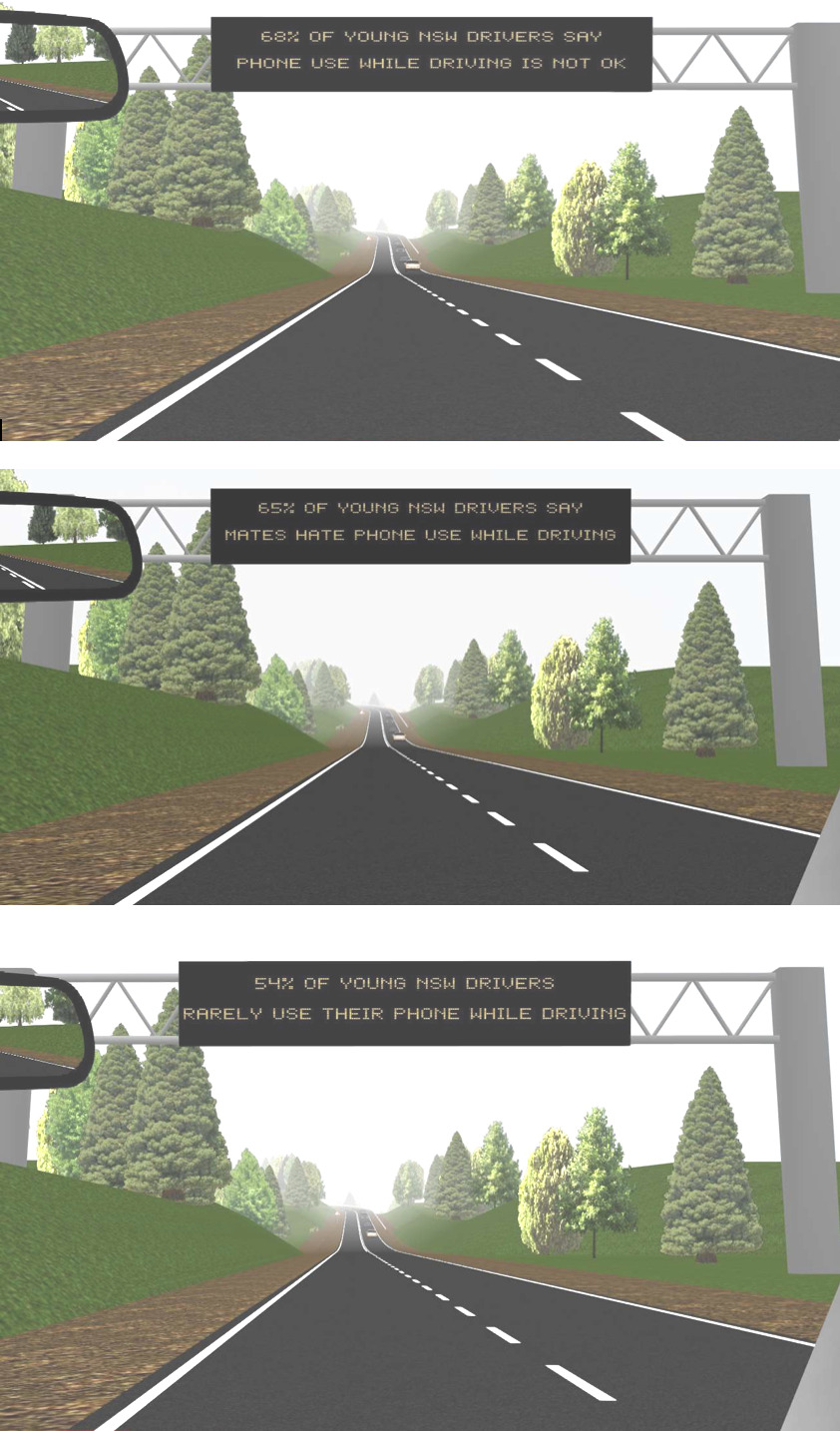
Three social norms messages were developed by the authors using data from a previous study (Gauld & Reeves, 2023). They focused on either descriptive norm, subjective norm, or injunctive norm and were presented on participants’ computer or smartphone screen as a static billboard image taken from a simulated driving environment (Figure 1). Each message was carefully developed with the key factors that are known to enhance the effectiveness of social norms messages. Specifically, they each included a strong referent group relevant to the target audience (i.e., young NSW drivers), were written in plain language appropriate for the target audience, and included a believable statistic drawn from a previous study (Gauld & Reeves, 2023). To ensure credibility, participants were told the source of the statistic before the message was presented. For example, the following text was included before presenting the injunctive norm message:
The following billboard message is based on a recent survey of 210 young NSW drivers aged 18 to 25 years. In the survey, ‘Phone use while driving’ referred to illegal phone use for their licence type. The percentage (68%) was the percentage of young drivers who responded 'strongly disagree, ‘disagree’ or ‘somewhat disagree’ when asked to rate the extent that they believed society, in general, approved of smartphone use while driving. The message is intended to be displayed on an overhead roadside billboard.
__subjective_norm_(middle)_and_de.png)
Results
Participants (N = 136; 92F, 44M). None of the participants identified as non-binary. Participants were aged 18-25 years (Mage = 21.15, SD = 2.10) resided in the Australian state of New South Wales, held either an open (n = 76) or provisional licence (n = 60), and owned a smartphone. Two thirds of participants self-selected to take part in this study via an online university student recruitment system (i.e., SONA) and one third of participants self-selected to take part via social media posts, face to face approaches, and recruitment flyers. Of the participants who started the survey, there was a 62 percent completion rate. Of these participants, 14 (10%) reported having received a fine for using their smartphone while driving and eight participants (6%) reported having been in a crash which resulted from smartphone use while driving.
Descriptive Statistics
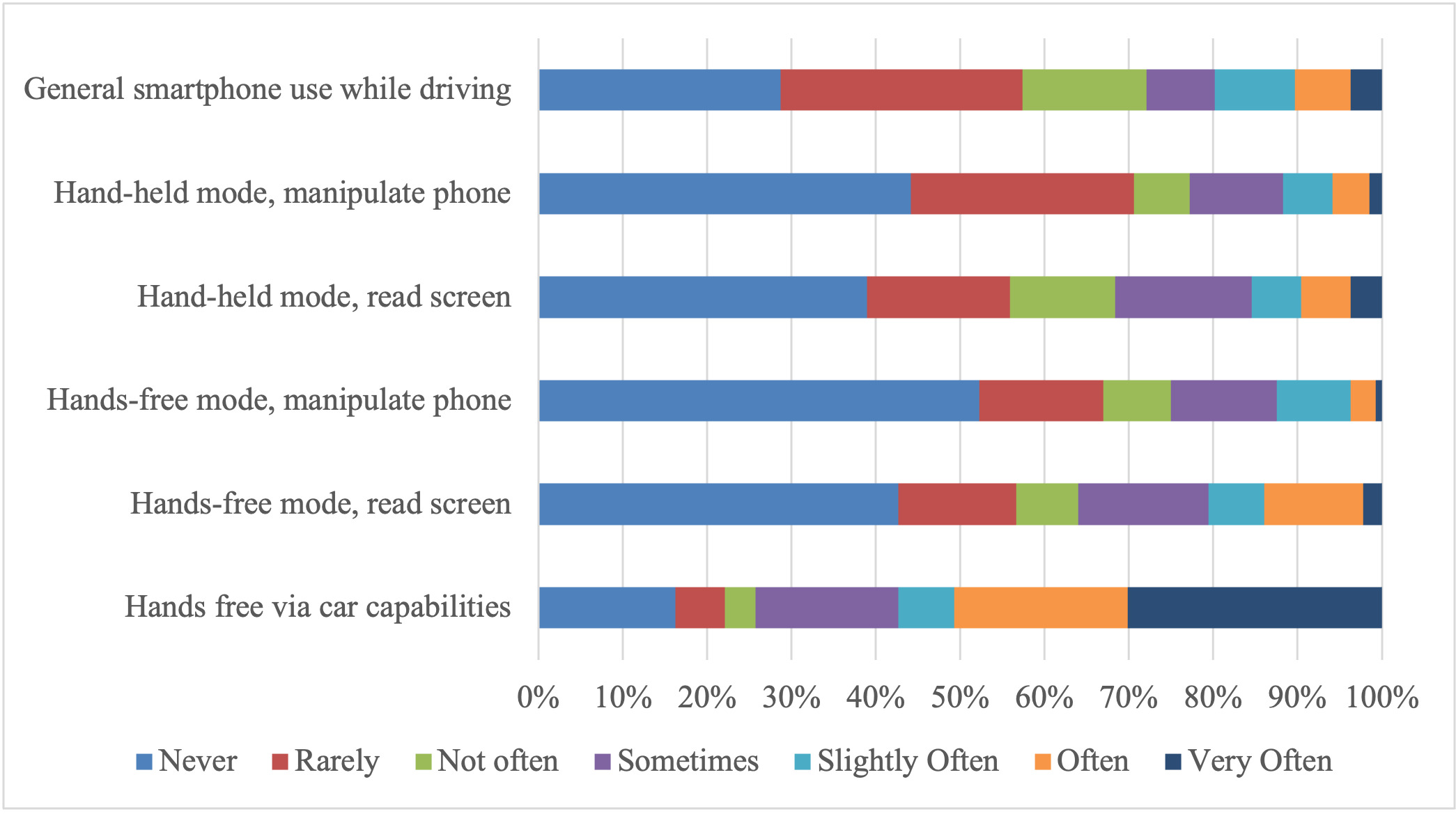
As shown in Table 1, 72 percent of participants reported using their smartphone while driving in a general manner in the past week. When asked about specific smartphone use while driving behaviours, 62 percent of participants reported reading the smartphone screen in hands-held mode and 56 percent of participants reported physically manipulating their smartphone (e.g., touch or hold) to some extent while driving (Figure 2).

Manipulation Check
A qualitative analysis of participants’ responses to the manipulation check question (i.e., ‘What do you think the main message was?’) was conducted to check that the messages had been interpreted as intended. Participants correctly interpreted the injunctive (i.e., 85% of the 41 participants who viewed this message) and subjective (i.e., 100% of the 43 participants who viewed this message) norm messages. Of the 52 participants who viewed the the descriptive norm message, however, responses from 12 participants (23%) suggested they incorrectly interpreted this message. These participants reported the opposite of what was intended by suggesting the message highlighted the frequent use of smartphones by young drivers[2].
Main Analyses
Table 2 presents descriptive results for each outcome measure (i.e., message acceptance, message rejection, third person effect) including gender and licence type. Table 3 presents the findings from each two-way ANOVA.
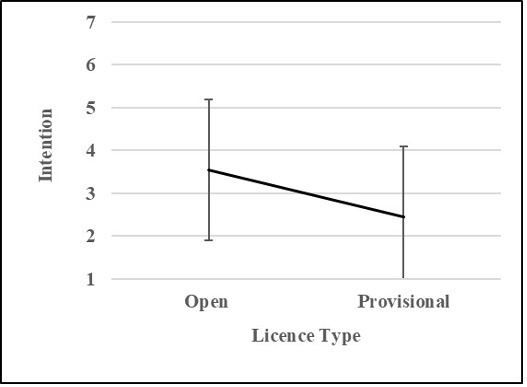
To address the first hypothesis, that social norms messages will be more persuasive for provisional licence holders than for open licence holders, a series of two-way ANOVAs were conducted with message type and licence type for each of the dependent variables (i.e., message acceptance, message rejection, and third person effect). As shown in Figure 3, and providing some support for the first hypothesis, there was a significant licence type main effect for intention F(1, 130)=13.56, p < .001, ŋp2 = .09. Specifically, open licence holders (M = 3.55, SD = 1.79) had a significantly higher intention than provisional licence holders (M = 2.44, SD = 1.65) to use their smartphone while driving in the next week, regardless of the message type.

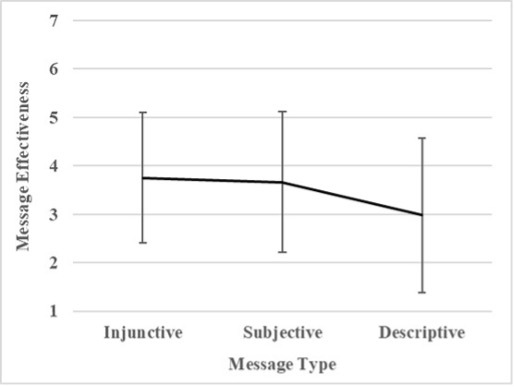
Figure 4 shows there was a significant message main effect, F(2, 130)=4.64, p = .011, ŋp2 = .07 for message effectiveness. Using the Bonferroni adjustment, a p-value of less than .02 (rounded to two decimal places) was applied to the post-hoc tests which found no significant differences between the pairs of messages. Inspection of Figure 4, however, suggests that both the injunctive norm message (M =3.75, SD = 1.35) and the subjective norm message (M = 3.66, SD = 1.45) were more effective than the descriptive norm message (M = 2.98, SD = 1.59).

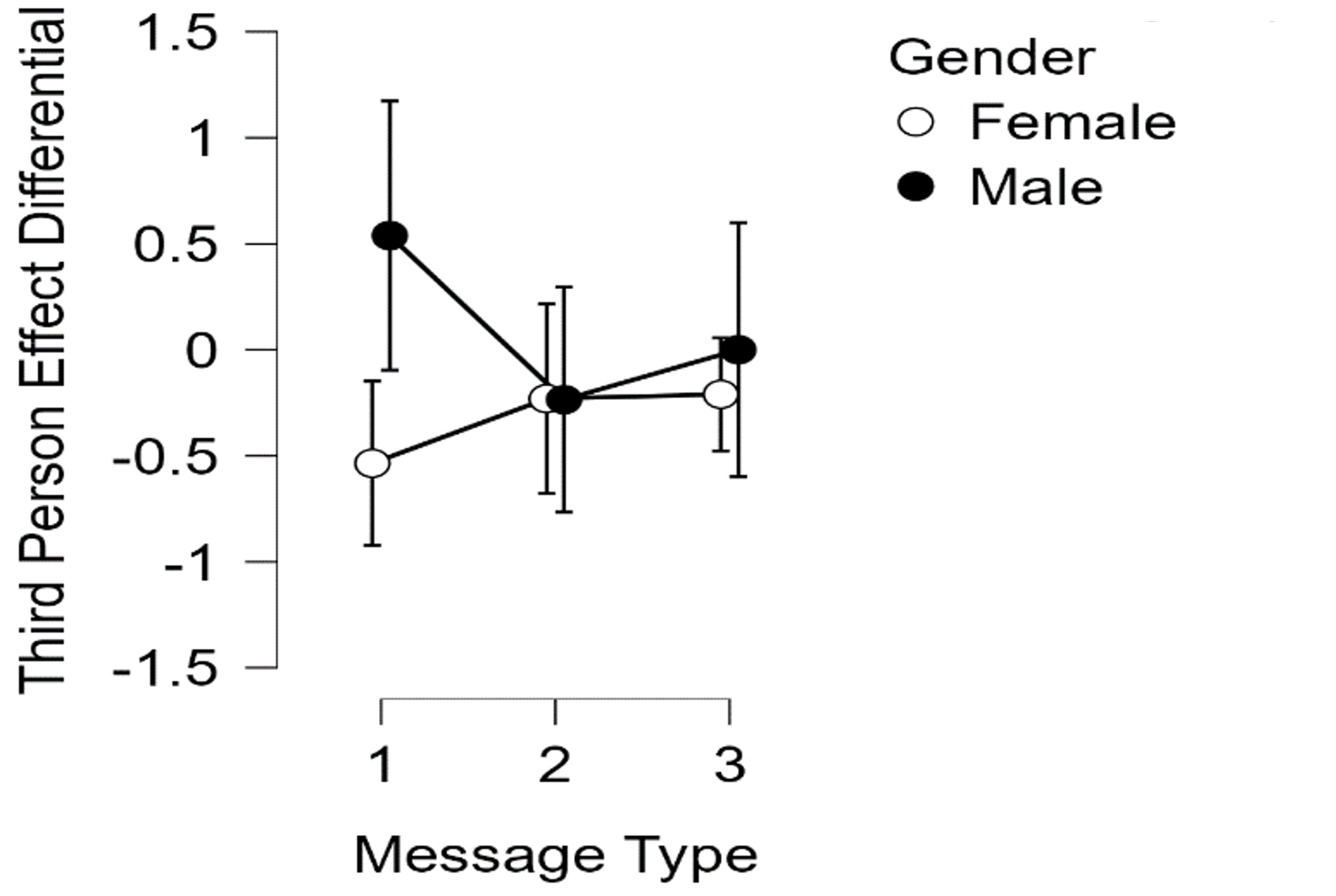
To address the second hypothesis, that social norms messages will be differentially persuasive for young male drivers and young female drivers, a series of two-way ANOVAs were conducted with message type and gender for each of the dependent variables (i.e., message acceptance, message rejection, and third person effect). As shown in Figure 5, and providing some support of the second hypothesis, there was a significant interaction effect for third person effect F(2, 130)=3.13, p = .047, ŋp2 = .05. Using the same Bonferroni adjustment, post hoc tests showed that males (M = 0.54, SD = 1.05) were significantly (p = .02) more likely to report the third person effect for the injunctive norm message than females (M = -0.54, SD = 1.00).

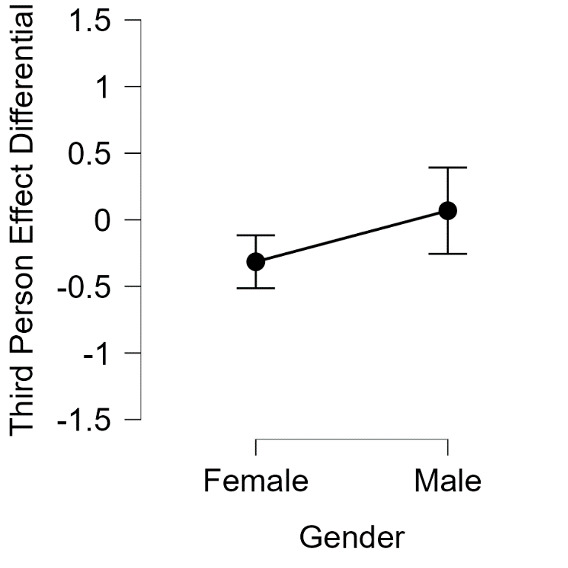
As shown in Figure 6, a significant gender main effect was found for third person effect F(1, 130)=5.45, p = .021, ŋp2 = .04. Specifically, males (M = 0.07, SD = 1.07) were significantly more likely than females (M = - 0.36, SD = 0.96) to report the third person effect, regardless of message. The same message main effect was found as for the analyses with licence type.

Discussion
The main aim of this study was to evaluate the relative effectiveness of three newly developed social norms messages aimed at reducing smartphone use among young drivers. Overall, both hypotheses were partially supported and the findings are discussed below.
In relation to the first hypothesis which posed that the messages would be more effective for provisional licence holders than for open licence holders, a significant main effect for licence type was found on the outcome measure of intention. There were no significant findings for message effectiveness, message rejection, or the third person effect. In support of the hypothesis, provisional licence holders reported significantly lower intention to use their smartphone while driving in the next week than the open licence holders, regardless of message type. It is acknowledged that this main effect may have been due to factors other than the social norms messages, such as attention. Provisional licence holders need more attention to drive so less is available for secondary tasks such as smartphone use (Romer et al., 2014). However, it could equally be argued that norms are more salient for provisional licence holders as they have more recent reminders of the consequences of using a smartphone while driving (e.g., recent licence testing) and harsher penalties if they are caught engaging in smartphone use while driving (i.e., the number of demerit points issued to a provisional licence holder for smartphone use may exceed their total number of demerit points and result in licence suspension). Norm salience at the time of viewing social norms messages is a key factor in their effectiveness (Reynolds et al., 2015). As such, the effectiveness of the social norms messages may have been greater for provisional licence holders than for open licence holders as they served as a reminder of the sanctions involved.
This finding also supports the Social Norms Approach (SNA) assertion that norms are more influential in settings where behavioural ambiguity exists (Berkowitz, 2004). In the current study, provisional licence holders were assumed to experience a higher level of behavioural ambiguity than open licence holders in relation to smartphone use while driving. This assumption was based on the fact that provisional drivers are newer to driving and may rely more heavily on their perception of others’ smartphone use while driving to guide their own behaviour (Gauld & Reeves, 2023). The current study operationalised levels of behavioural ambiguity by licence type where it was assumed that provisional licence holders would experience more behavioural ambiguity than open licence holders in relation to smartphone use while driving. It is possible, therefore, that as predicted, viewing social norms messages lowered the intention to use a smartphone while driving among provisional licence holders compared to open licence holders. As such, it would be worthwhile further investigating a range of social norms messages for provisional licence holders only. Future research could compare message effectiveness for Provisional 1 licence holders (first year of unsupervised driving) and Provisional 2 licence holders (at least 12 months’ driving experience).
In relation to the second hypothesis which posed that the messages would be differentially effective for young male and young female drivers, both a significant gender main effect and a significant gender X message interaction were found for the outcome measure of third person effect. There were no significant findings for intention, message effectiveness, or message rejection. While these two significant findings supported the hypothesis, there was a predominance of female participants in the study, particularly in the descriptive norm message group, and to a lesser extent in the injunctive norm message group. As such, these gender findings need to be interpreted with caution as their generalisability may be limited.
With this caveat in mind, for the gender main effect, young male drivers were significantly more likely to report the third person effect regardless of message, than young female drivers which supports previous road safety message evaluation research (Gauld et al., 2020; Lewis et al., 2007). For the significant gender X message interaction effect, young male drivers were significantly more likely to report the third person effect for the injunctive norm message than young female drivers. Previous research shows that the third person effect and gender are related where males are, overall, more likely than females to report the third person effect (Gauld et al., 2020; Lennon et al., 2010; Lewis et al., 2007; Lewis, Ho, et al., 2016). Previous research has also found that adolescents’ engagement in risky behaviours (including risky driving behaviours) is more likely to be influenced by other adolescents than by adults (Knoll et al., 2017; Kraft-Todd et al., 2015).
The injunctive norm message in the current study was concerned with broader societal approval (which may be perceived as adults), whereas the subjective norm message was concerned with approval of important others (i.e., mates). Given young male drivers are more likely than young female drivers to engage in risky driving behaviours, such as smartphone use (Gauld et al., 2020), this previous research may provide insights for why young males reported the third person effect to the injunctive norm message and not to the subjective norm message in the current study. Conversely, the young female drivers were significantly less likely than the young male drivers to report the third person effect for the injunctive norm message. Given that in general, females are more concerned with maintaining relationships than males, this finding supports previous research which suggested that females are more responsive to injunctive norm messages because they are based on social approval (Jacobson et al., 2011; Yang & Girgus, 2019).
For both sets of analyses with licence type and gender, a significant message main effect was found. While the post-hoc tests did not reveal significant differences between any of the specific pairs of messages, inspection of Figure 3 shows that both the injunctive norm message and the subjective norm message scored higher on message effectiveness than the descriptive norm message, regardless of licence type and gender. Broadly, this finding is consistent with the importance young adults place on approval from others (Blakemore, 2018). This finding may also be due to the higher (and more persuasive) statistics in the injunctive norm (68%) and subjective norm messages (65%) and the lower (and less persuasive) statistic in the descriptive norm message (54%). While the current study included statistics based on actual research data (Gauld & Reeves, 2023) which is said to enhance message effectiveness (Haines et al., 2005), the manipulation check suggested there may be some ambiguity in the descriptive norm message. A quarter of participants focused on the message that 54 percent of young drivers ‘use’ their smartphone, rather than 54 percent of young drivers ‘rarely’ use it. As such, their interpretation of the message was the opposite of what was intended (i.e., had a boomerang effect). To mitigate the boomerang effect, future research could combine the descriptive norm message with either an injunctive norm message or a subjective norm message, an approach that has been effective in previous studies (Schultz et al., 2007).
Addressing the main aim of this study and identifying the most effective of the three messages was not straightforward. It is safe to conclude however, that the descriptive norm message was the least effective of the three messages. This conclusion is based on the findings that it was reported to be the least effective of the three messages and was ambiguous to some participants. While both injunctive and subjective norm messages were reported to be more effective than the descriptive norm message, young male drivers were more likely to report the third person effect for the injunctive norm message than young female drivers. Previous research suggests that young male and young female drivers need different messages to be effective (Gauld et al., 2020; Lennon et al., 2010; Lewis et al., 2007). These results indicate the injunctive norm message was most effective for the young female drivers and the subjective norm message was most effective for the young male drivers. Given research regarding the effectiveness of social norms messaging in the context of smartphone use among young drivers is in its infancy, more research needs to be conducted to ratify these early findings.
In relation to practical implications, while more research is required, social norms messages may be an important component of future road safety campaigns (Berkowitz, 2004), particularly for provisional licence holders. They could be integrated into other educational interventions which utilise theoretically based behaviour change techniques, such as the Safer Driver app (Van Vliet et al., 2024). For example, adding social norms messages as ‘knowledge bites’ (p.5) which form part of the educational aspect of the app or adding social norms messages as a behavioural change technique to correct normative misperceptions that the driver may hold. Given young people have a preference for short, sharp pieces of online information (e.g., X feed) (Newman, 2010), social norms messages may form an important part of educational webpages regarding the dangers of smartphone use.
More broadly, gender-specific social norms messages may be more effective than generic messages. In particular, injunctive norm messages could target young female drivers and subjective norm messages could target young male drivers. These gender differences support the growing body of research that suggests road safety messages need to differentially target young male and young female drivers (Gauld et al., 2020; Lennon et al., 2010; Lewis et al., 2007). Given messages are more effective when the norm is highly salient, in situ messaging may be more effective methods, for example radio (e.g., public service announcements) and/or billboard messages that present messages while the person is driving (Reynolds et al., 2015; Wilson & Casper, 2016).
Strengths and Limitations
This study was one of the first to evaluate the effectiveness of social norms messaging in the context of smartphone use among young drivers. The messages were developed with theoretical (i.e., SNA) and evidence-based guidance. They contained a clear referent group (i.e., NSW young drivers) which was broad enough to reach all participants and were worded in the language of the target audience with direct disapproval for the injunctive norm message and the subjective norm message (Berkowitz, 2004; Cialdini et al., 2006; Haines et al., 2005). Of note, the evaluation was guided by a contemporary theoretical framework (i.e., the SatMDT; Lewis, Ho, et al., 2016) and included a range of outcome measures.
However, there were limitations. While the statistics were drawn from an actual study and the source of the statistics was included in the survey to provide authenticity, the meaning of the descriptive norm message was ambiguous for some participants. Piloting the messages may have removed the ambiguity prior to data collection. While actual roadside billboards can be an effective medium for message delivery as both the target behaviour and norm are salient at the time of viewing (Wilson & Casper, 2016), the survey was not able to emulate these conditions. As for all survey studies, a degree of social desirability bias is a limitation; however, efforts were made to mitigate this through the confidential survey to encourage participants to respond honestly. While efforts were made to recruit an even number of males and females, there was a predominance of females, particularly for the descriptive norm message group. Given gender was a key aspect of the study, future research should consider implementing a quota system so that equal numbers of males and females are recruited. As noted above, all participants identified as either female or male. None of the participants identified as non-binary.
Of note, and in accordance with a G-Power analysis, the sample size (i.e., 136 participants) was just short of that required for adequate power to detect a medium effect size (i.e., 155 participants). The sample did, however, exceed that required to detect a large effect size (i.e., 63 participants).
Conclusions
Given the continued prevalence of smartphone use by drivers, the current study provides important insights into the effectiveness of social norms messaging among young drivers. Specifically, social norms messages may be differentially effective for young male and young female drivers such that injunctive norm messages may be effective for young female drivers and subjective norm messages may be effective for young male drivers. Given a greater level of behavioural ambiguity exists for provisional licence holders than open licence holders, social norms messages may be more effective for those new to driving.
How the messages are framed may also have an important role to play. In the current study, the messages were negative, however, framing the messages in a positive manner (e.g., ‘54% of young drivers silence their phone when driving’) may be effective among young drivers, especially young male drivers, who respond better to messages that are positively framed (Gauld et al., 2020; Lewis et al., 2007). Future studies could include social norms messages in research-level driving simulators, where the driver would “pass-by” the message billboard in a more naturalistic way while simultaneously managing the competing attention demands from the other driving-related tasks. In accordance with previous survey studies, in addition to assessing baseline level of smartphone use while driving, assessing behaviour 1-week post-message exposure may provide a more accurate indication of the effectiveness of the messages (Gauld et al., 2014). While the descriptive norm message was not effective when presented on its own as in the current study, future research could consider a combination of a descriptive norm message and a subjective norm message for young male drivers and a descriptive norm message and an injunctive norm message for young female drivers (Schultz et al., 2007). While more research needs to be conducted with social norms messaging to young drivers, these preliminary findings suggest that social norms messages may provide an innovative addition to the current road safety messaging approaches.
AI tools
AI tools were not used in this study nor in the preparation of this paper.
Author contributions
Cassandra Gauld: Conceptualisation, methodology, validation, formal analysis, resources, writing-original draft, writing -review and editing, supervision, project administration Tanya Craft: Conceptualisation, methodology, resources, writing: review and editing Marcin Stepnik: Conceptualisation, methodology, resources, data curation
Funding
This research did not receive any specific grant from funding agencies in the public, commercial, or not-for-profit sectors.
Human Research Ethics Review
All participants were provided with an information sheet prior to taking part in the study. Submission of the survey was taken as implied consent for inclusion. The study was conducted in accordance with the Declaration of Helsinki, and the protocol was approved by the University of Newcastle Human Ethics Committee, approval code H-2022-0014.
Data availability statement
Materials and data associated with this project can be made available on request.
Conflicts of interest
The authors declare that there are no conflicts of interest.
The norms literature contains definitional inconsistencies for subjective norm and injunctive norm. The definitions in the current study align with those outlined in Reynolds et al. (2015) and Gauld and Reeves (2023).
The main analyses were run with and without these 12 participants to see if their removal affected the results. The significant findings were the same both with and without these participants so they were retained in the analysis.